
Published: 15th January 2026
Whether you're coaching an under-7s team on a muddy Thursday night or working with seasoned players at a semi-pro club in a stadium, one thing separates good sessions from great ones: structure.
It's easy to rock up to the pitch with a bag of balls and a vague idea of what you want to work on. We've all done it. But if you want your players to genuinely improve—and actually enjoy training—then having a clear session structure makes all the difference.
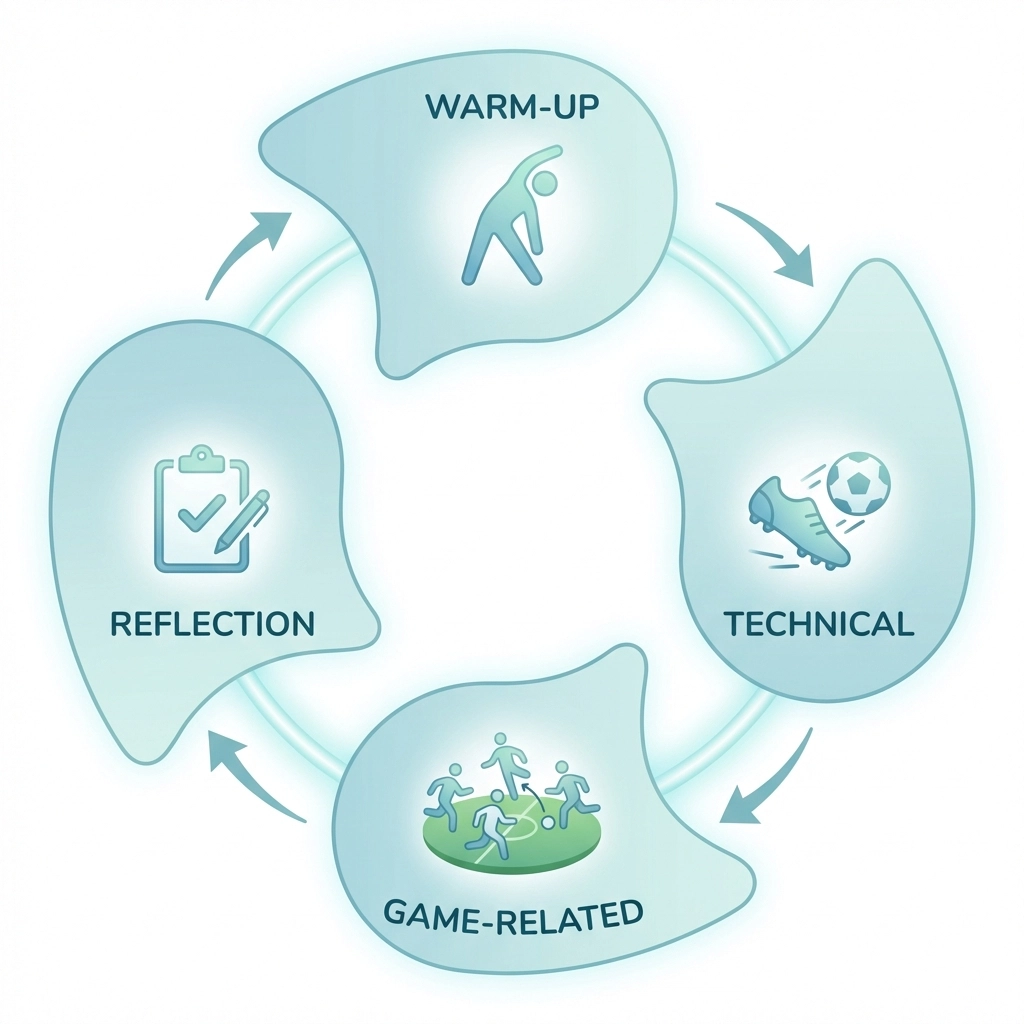
The good news? You don't need a UEFA Pro Licence or a fancy facility to run well-organised sessions. From grassroots to elite level, the same framework applies: warm-up, technical work, game-related activities, and reflection.
Let's break down why each element matters and how you can use this structure to level up your coaching.
Why Structure Matters (For Every Team)
There's a common misconception that structured sessions are only for academies or professional setups. That couldn't be further from the truth.
Structure isn't about being rigid or taking the fun out of football. It's about giving your session a clear flow so players know what to expect, stay engaged, and get the most out of their time on the pitch.
Think about it from a player's perspective. Turning up to training and being told to "just have a kick about" might sound relaxed, but it doesn't help anyone improve. On the flip side, a session that moves logically from warming up to working on a particular theme to applying it in a game scenario? That's where real development happens.
Structured sessions also help you as a coach. When you've got a plan, you spend less time figuring out what to do next and more time actually coaching. You can focus on giving feedback, correcting technique, asking players the right questions to aid self-learning and discovery, and encouraging your squad.

Phase 1: The Warm-Up
Every good session starts with a proper warm-up. This isn't just about avoiding injuries (though that's obviously important): it's about getting players physically and mentally ready for what's ahead.
A solid warm-up typically lasts around 15 to 20 minutes and should be progressive. Start slow and gradually increase the intensity. You want players' heart rates up, their muscles warm, and their heads in the game — but this isn't simply about physiology. The warm-up is where the session theme is first introduced, so every activity should connect directly to what follows.
What to include:
- Light jogging and movement – Get players moving around the pitch at a gentle pace. Mix in sideways runs, backwards jogging, and changes of direction.
- Dynamic stretches – Leg swings, hip circles, lunges with a twist. Save the static stretches for after training.
- Ball work – Incorporate the ball early. Every CoachAI session is designed to maximise touches from the first minute. Use rondos, directional passing patterns, or fun football tag games at younger age groups — always tied to the session theme.

Phase 2: Technical Work
Once players are warmed up, it's time to get into the technical phase. This is where you isolate and practise specific skills — whether that's breaking lines in midfield, preventing turns, ball mastery, receiving to turn, attack-to-defence transitions, or counter-pressing. The theme you introduced in the warm-up now takes centre stage.
This phase usually lasts around 25 to 45 minutes, depending on your overall session length and the age of your players. Younger players will need shorter, punchier activities with frequent rotation to maintain focus. With older or more experienced groups, you can afford deeper repetition and more detailed coaching interventions.
Keep practices realistic. Unopposed drills have their place, but move towards opposed or semi-opposed work as quickly as your players are ready. Decision-making under pressure is what transfers to match day.
Phase 3: Game-Related Activities
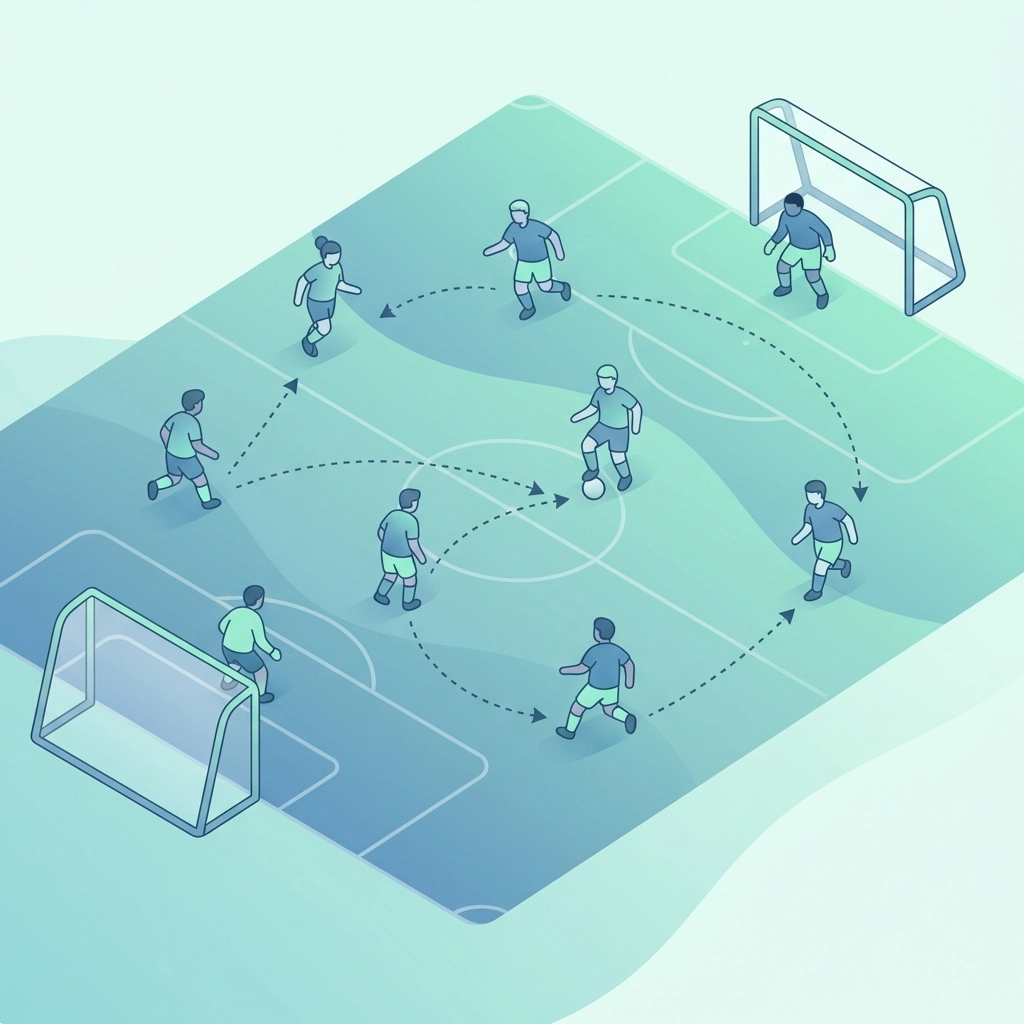
Here's where the magic happens. Game-related activities take the skills you've been working on and put them into a realistic context. Players learn by doing, and there's no better teacher than match-like scenarios.
Ideas for game-related activities:
- Small-sided games – 4v4, 5v5, or 6v6 games are ideal. Players get more touches, more decisions to make, and more chances to apply what they've learned.
- Conditioned games – Add rules that encourage specific behaviours. For example, "two-touch only" to sharpen quick passing, or "must play through all three thirds" to practise building from the back.
- Overload situations – Create scenarios like 3v2 or 4v3 to help players recognise and exploit numerical advantages.
- Position-specific work – Set up games that focus on particular areas of the pitch or phases of play, such as attacking the final third, pressing triggers, or defending wide areas.
The key here is to let players problem-solve. Resist the urge to stop play constantly — let the game breathe, observe carefully, and save your coaching points for natural stoppages or the reflection phase. Freeze the game only when a teachable moment is too valuable to let pass.
Phase 4: Reflection
This is the phase that most often gets dropped when time is tight — but it's one of the most valuable parts of any session.
Reflection doesn't need to be a long, formal debrief. Even five to ten minutes at the end of training can have a meaningful impact on player development and team culture.
Why reflection matters:
- Reinforces learning – Talking through what players practised helps cement the key points in their minds.
- Encourages self-awareness – Asking players what went well and what they found tricky helps them take ownership of their own development.
- Builds team culture – Gathering together at the end of a session creates a sense of unity and signals that improvement is a shared responsibility.
How to run a good reflection:
- Ask open questions – "What did you find challenging today?" or "How did you use what we practised in the game?" work far better than yes/no questions.
- Keep it positive – Highlight effort and improvement, not just outcomes.
- Involve everyone – Give quieter players a chance to contribute. You'll often get the sharpest insights from unexpected sources.
- Return to your KPIs – Remind players of the success criteria you set at the start. "How many times did you receive on your back foot to enable a quick switch of play?" brings the session full circle and makes the learning concrete.
Don't overlook the physical side either. A brief cool-down with light stretching helps players recover, reduces stiffness, and — crucially — gives you a natural, low-intensity moment to have those one-to-one conversations that are harder to fit in during a busy session.
Adapting the Framework for Different Age Groups
The four-phase structure works at every level, but the emphasis shifts depending on who you're coaching. With under-9s and under-11s, keep each phase short and activity-rich — attention spans are limited and variety maintains energy. The reflection phase can be as simple as a quick huddle with two or three questions. With under-14s and above, you can introduce more tactical context in the technical phase and push players harder in the reflection to articulate their own decision-making. At adult grassroots level, players often respond well to being given a say in how sessions are shaped — asking the group what they want to improve builds buy-in and accountability. The framework stays the same; the delivery changes.
Bringing It All Together
When you consistently follow this four-phase structure — warm-up, technical, game-related, reflection — you create sessions that are purposeful, engaging, and effective. Players know what to expect, they get quality practice time, and they leave the pitch having genuinely learned something.
The beauty of this framework is its scalability. Whether you're coaching a group of enthusiastic seven-year-olds at a local club or preparing a squad for a cup final, the principles stay the same. The structure does the heavy lifting so you can focus on the coaching.
And if planning sessions feels like a chore, that's exactly where tools like CoachAI come in. Our platform generates structured, theme-led session plans in minutes — so you can spend less time staring at a blank notepad and more time doing what you love: coaching.
Final Thoughts
Structure isn't about sucking the joy out of football. It's about giving your players the best possible chance to improve while still having fun on the pitch.
So next time you're planning a session, think about those four key phases. Warm them up properly, work on the technical theme, let them play, and take a moment to reflect. Your players — and your coaching — will be better for it.
CoachAI builds this exact four-phase structure into every session plan it generates. See the full feature set to understand what the AI produces — or if you want to compare plans, visit our pricing page, including the completely free Starter option. For clubs looking to standardise this approach across all their coaches, our Club portal is worth a look. You might also enjoy our guide to coaching decision-making at U11–U13.